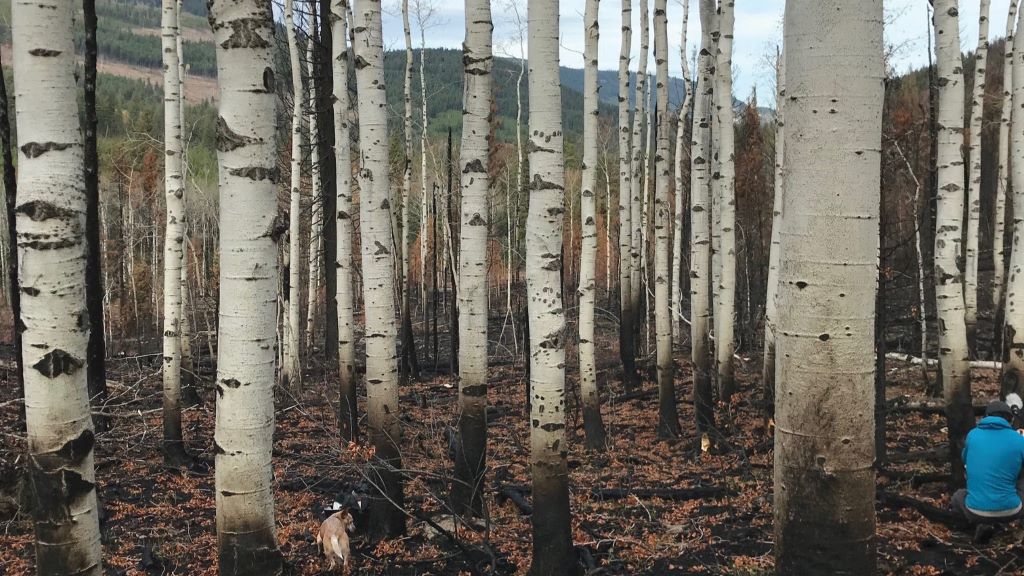
Thousands of hectares of Canadian forest are sprayed every year with glyphosate, a weed-killing agent, for the sole purpose of killing off grasses, shrubs, and deciduous trees.
Yes, really.
It sounds unbelievable, but in the eyes of Canada’s forest industry, maples, alders, aspens, birch, ferns, fireweed, bluejoint grass, every kind of local berry, and other native species are considered weeds or pests. So they are removed, sometimes through a manual process called brushing, but more often by helicopters spraying large quantities of glyphosate.
Glyphosate is also in Roundup®, which was originally invented and sold by Monsanto but is now owned by Bayer. In 2015, the International Agency for Research on Cancer (IARC) concluded that glyphosate is “probably carcinogenic to humans.” Since then, Roundup has been banned for cosmetic use in many places, and a quick Google search reveals that thousands of Roundup lawsuits are ongoing against Monsanto and Bayer, with almost US $11 billion in settlements paid out to date, many to people who claim exposure to Roundup gave them non-Hodgkin’s lymphoma.
So why in the world is this product routinely sprayed on Canadian forests?
Because when native species begin to grow in a replanted cutblock, they compete for space, light, moisture, and nutrients with commercially desirable conifers, which are naturally glyphosate-resistant.