In 2017, I was researching the spread of the Atlantic salmon blood virus piscine orthoreovirus, or PRV. Since I was not allowed to test Atlantic salmon in the farms, I bought them from Superstore, Costco, and sushi restaurants.
The majority of Atlantic salmon sold in BC tested positive for PRV. This means millions of Atlantic salmon along the BC Coast were shedding a foreign, pathogenic, highly-contagious waterborne virus into the Pacific Ocean. I wanted to know which companies’ farms were infected.
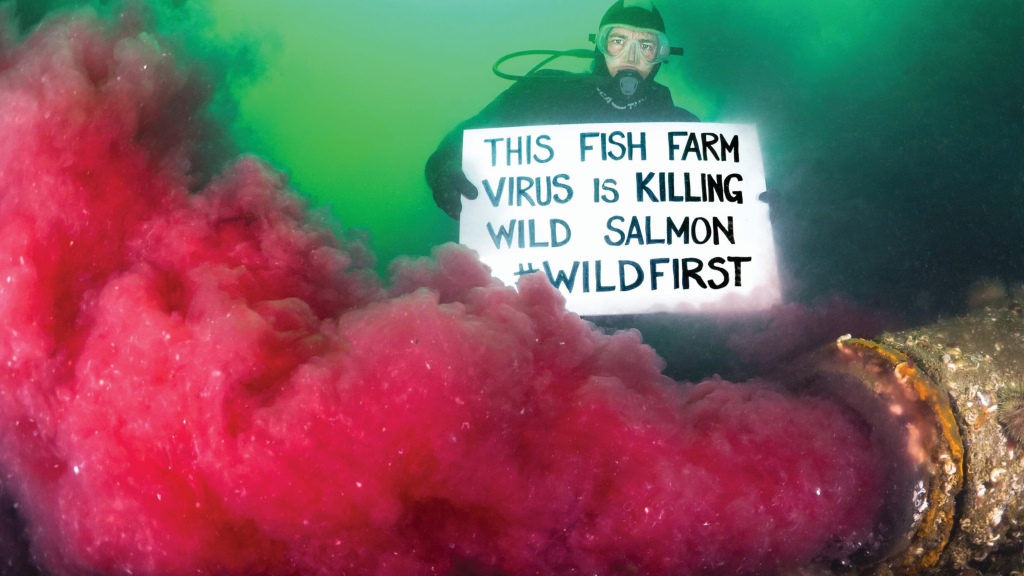
Using marinetraffic.com, I saw a farm salmon harvest boat moving back and forth between Cermaq’s Raza Island salmon farm in the Discovery Islands and the Brown’s Bay farmed salmon packing plant. This meant salmon raised at Raza Island were being gutted in Brown’s Bay. I asked Tavish Campbell, local underwater filmmaker, if he would dive on the plant’s effluent pipe 90 feet below the surface. Tavish filmed the plume of blood billowing into Discovery Passage and then, placing a fine-mesh plankton net over the pipe, captured a sample, twisted it shut, carried it to the surface, and gave it to me. I sent it on ice to a lab – the blood was infected with PRV.
Containing the damage
A new disease began sweeping through salmon farms in Norway in the 1990s. It took ten years for virus sleuths to connect the disease, known as Heart and Skeletal Muscle Inflammation, to the virus PRV. By that time the salmon farming industry had imported 30 million Atlantic salmon eggs into BC. No screening for this blood virus occurred. No one knew it existed. While Atlantic farm salmon may recover from PRV infection by remaining motionless in the pens for a period of time, DFO scientists found PRV invades wild Pacific salmon red blood cells, causing the cells to rupture en masse, resulting in organ failure.
The disgusting footage of blood flowing into BC waters made international news. I notified the BC government that it was infected with an Atlantic salmon virus. DFO confirmed my results. BC Environment minister George Heyman responded; “the bottom line for us is we want to make sure anything dumped into our oceans is free of pathogens.”
Great sound bite.
On April 19, 2019, the Brown’s Bay Packing Company was granted permission to dump almost 20 times more blood than when the samples were taken. They were processing 32 million pounds of fish per year. That’s a lot of offal and blood to get rid of. Pouring it into the ocean was probably beneficial to their bottom line, and the BC government quietly made it happen for them.
In 2022, a report by DFO revealed young salmon exposed to the Brown’s Bay Packing Company effluent became infected with PRV.