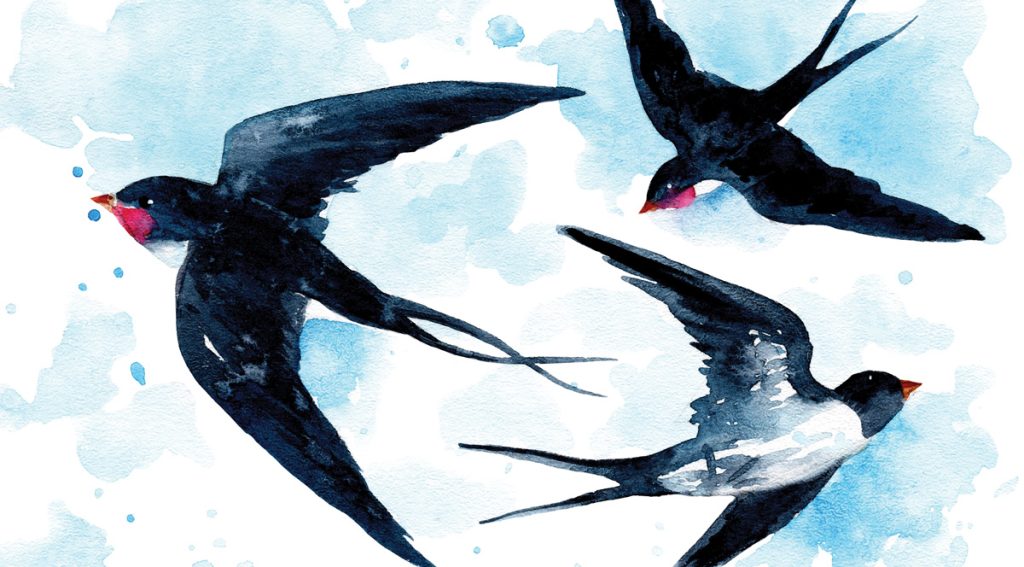
On a cool spring morning, as I walk hand in hand with my daughter, we look up, our attention drawn to the bright, quick chatter of the swallows overhead. They dart and swoop in the crisp air, catching insects on the wing and calling to one another as they stake claim to the skies.
Our walk to school is a ritual years in the making, but what we witness in the skies above is far older, older than our town, older than our species’ memory of this place. Yet there may come a day, perhaps soon, when the skies above fall silent, and we will have to find new signs to tell us that spring has come.
For as long as we’ve built homes, swallows have shared them with us. They nested beneath the eaves of Roman villas, in the beams of medieval barns, and in the roofs of the longhouses of the Snuneymuxw people whose unceded territory my daughter and I walk upon. Their return each spring has been celebrated in song and scripture, a promise of renewal as old as language itself. The ancient Greeks saw them as messengers from the gods, symbols of hope and rebirth. Sailors tattooed swallows on their chests before long voyages, believing that if they drowned, the birds would carry their souls home.